



PAST EVENT
As part of the official AI for Good Summit programme organized by the International Telecommunication Union, AI Safety Connect convened approximately 150 senior delegates for an invitation-only lunch marking the tenth anniversary of AI for Good. Held during a landmark week in Geneva that included the inaugural Global Dialogue on AI Governance and the publication of the preliminary report of the Independent International Scientific Panel on AI, the lunch brought together heads of delegation and senior officials from government, industry, academia and civil society.
The discussion took stock of the current landscape in frontier AI safety and governance, with a central theme of moving from risk management to crisis preparedness. Through opening remarks, a panel discussion, firestarter interventions and World Café-style table conversations, participants worked to identify a shared set of cross-regional priorities for AI crisis preparedness to carry forward to the 81st Session of the United Nations General Assembly in New York this September.
The event was co-hosted with AI For Good and with support from our donors, International Association for Safe and Ethical AI (IASEAI).

Welcome
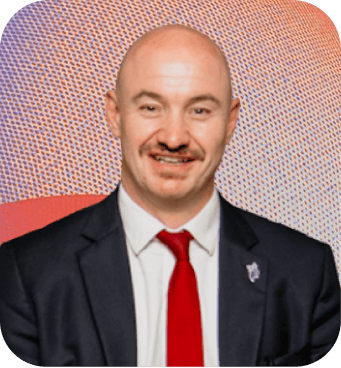
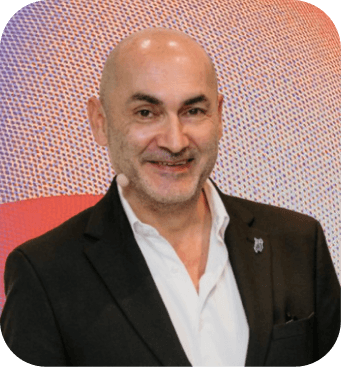
As Masters of Ceremony, Nicolas Miailhe and Cyrus Hodes opened the lunch by congratulating ITU on the tenth anniversary of AI for Good, noting that AI Safety Connect had been present at the very first edition, and framing the gathering as a pivotal international AI governance window on the road from Geneva to UNGA 81.

Opening Remarks

The Under-Secretary-General reflected on a week in which the UN platform became the hub for global AI conversations through the inaugural Global Dialogue on AI Governance, the AI for Good Summit and the WSIS Forum, drawing more than 4,000 participants from over 170 countries and uniting science, policy and capacity for the first time.
— "It has reinforced an essential principle: that shaping AI is a collective responsibility, that every country, big or small, must have a voice in it."

Citing the Scientific Panel's preliminary report and the International AI Safety Report, Ambassador Garcia warned of emerging, unpredictable behavior from powerful AI systems, questioned how far societies should go in delegating decision-making to AI in critical infrastructure, and mapped three categories of risk: misuse, malfunction and systemic effects.
— "So far, no single safeguard reliably prevents harm."
He called for international coordination alongside domestic measures.
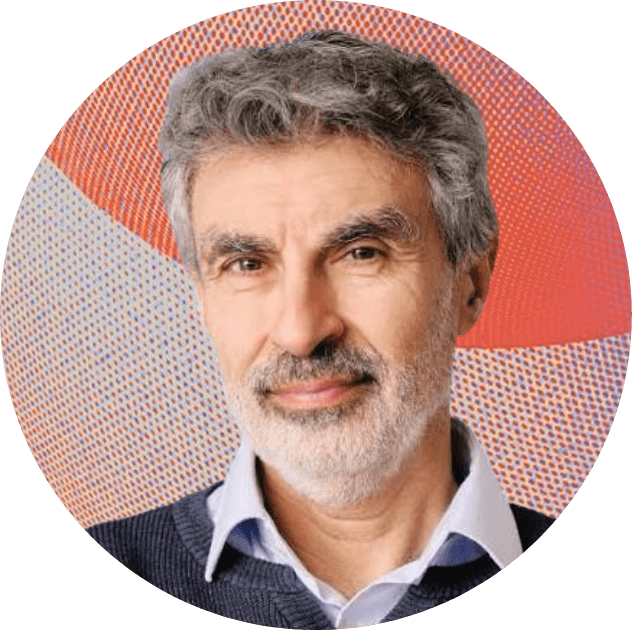
Professor Bengio presented findings from the Panel's preliminary report, noting that on some agency metrics capabilities have doubled every few months for several years while significant gaps remain in the societal infrastructure and scientific methodologies needed to manage the risks.
— "We still have no technical guarantees that AI will follow our instructions, norms or laws. In fact, there is a lot of evidence, both in the lab and in deployed systems, of bad behavior."
He closed by putting the ball in the camp of member states to act on the evidence.
Panel — Crisis Preparedness for Frontier AI Safety

Ms. Maria Ressa
Co-Chair, Independent International Scientific Panel on AI

Prof. Stuart Russell
Senior Adviser, International AI Safety Report 2026; President, International Association for Safe and Ethical AI (IASEAI)

Dr. Jean-Marc Rickli
Head of Global and Emerging Risks, Geneva Centre for Security Policy

Ms. Natasha Crampton
Vice President and Chief Responsible AI Officer, Microsoft
Mr. Nicolas Miailhe
Co-Founder, AI Safety Connect
The panel examined how policymakers, industry and civil society can prepare for and respond to a frontier AI crisis, moving beyond risk management toward operational crisis preparedness.

Ms. Maria Ressa Co-Chair, Independent International Scientific Panel on AI
Ressa opened with the starkest framing of the week,
— "If we don't act now, that's it. And the Secretary-General actually said this may be humanity's last chance,"
before introducing three concepts from the Panel's work on information integrity: epistemic erosion, the liar's dividend and synthetic consensus, AI-generated content manufactured at scale. Pointing to the concentration of compute (75% in America, 15% in China, 5% in the EU), she urged delegations to — "come together, find the common ground, and actually push for the safety that your people deserve."


Prof. Stuart Russell Senior Adviser, International AI Safety Report 2026; President, IASEAI
Professor Russell argued the alarm bells are already sounding,
— "We test these systems to make sure they do not do bad things, and they do bad things in the tests," yet "the whole world has epilepsy and is not responding to the alarms that are flashing."
On loss of control, he warned there can be no emergency response because by definition it comes too late, calling instead for verification mechanisms focused on precursors such as self-replication, recursive self-improvement and resource acquisition:
— "We're talking about a cleanup response to something for which we have no safety regulations. That is obviously broken."
Dr. Jean-Marc Rickli Head of Global and Emerging Risks, Geneva Centre for Security Policy
Dr. Rickli distilled lessons from other high-stakes domains into concrete building blocks, international standards, independent evaluation institutions, capability-based thresholds, shutdown authority, mandatory incident reporting and crisis communication channels, while cautioning that they collide with a geopolitical and technical perfect storm:
— "Trust takes time, and AI does not wait."
His closing warning:
— "My worry is that with this technology, there might be a point where, if we hit a crisis, returning to where we came from will no longer be possible."

Quickfire — What Needs to Be in Place Before the Next AI Crisis?
Closing the panel, each speaker named the one thing that must exist before the next AI crisis:
• Maria Ressa urged governments not to wait, building public interest tech stacks and adopting ROOST, the free open online safety tools incubated at Columbia University;
• Stuart Russell named liability, technical measures and the registration of all AI systems with a cryptographically non-removable off switch;
• Jean-Marc Rickli put incentives above institutional structure — "as long as the key players do not agree about an issue, nothing can happen"; and
• Natasha Crampton called for communication channels between industry and government, within government and across governments, because crisis response — "cannot be centered only in countries that happen to have deep AI capability. It really needs to be global."
Firestarters

H.E. Philip Thigo
Special Envoy on Technology, Kenya

Dr. Leslie Teo
Senior Director of AI Products, AI Singapore; Member, Independent International Scientific Panel on AI
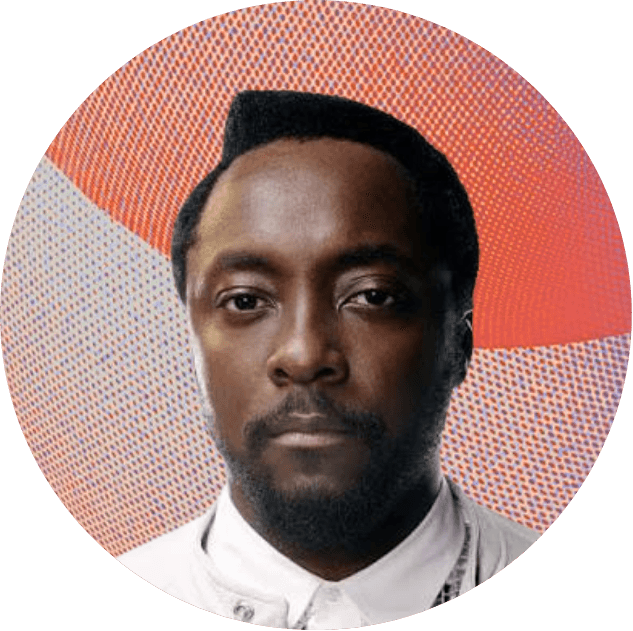
will.i.am
Founder and CEO, FYI.AI; Goodwill Ambassador, AI Skills Coalition; Member, AI for Global Good Commission

Ms. Chloé Touzet
Head of Policy, SaferAI
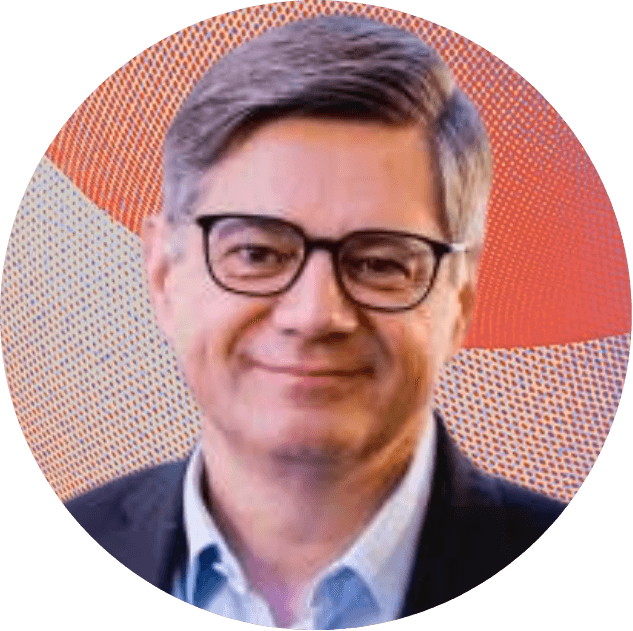
Fr. Eric Salobir
President of the Executive Committee, Human Technology Foundation; Member, AI for Global Good Commission
H.E. Philip Thigo Special Envoy on Technology, Kenya
Drawing on Kenya's experience with digital crisis response, Ambassador Thigo challenged the room's framing:
— "Everybody's talking about existential crisis. I think we're already in a crisis. The fact that we do not know we're in a crisis is, for me, the problem."
Communities are always the first responders, he argued, so public understanding of AI is itself resilience-building, and impact evaluation should measure disruption to people's lives and livelihoods, because — "AI is not an earthquake, it's not a flood; it's an intelligent crisis. It means you have a capability that can fight back."

Dr. Leslie Teo Senior Director of AI Products, AI Singapore; Member, Independent International Scientific Panel on AI
Speaking as a builder and veteran crisis manager, Dr. Teo offered two lessons: identification and trust. The underlying cause of an AI crisis is not always the model, he argued;
— "beyond the Terminator scenario lies the Matrix. Everything looks okay, but we are not living the reality," a crisis driven by human and societal decisions with the model merely the tool. And trust must be built in advance:
— "When a crisis happens, it's too late to build trust," recalling a policymaker who once told him, — "I don't get elected to solve a crisis. If I prevent a crisis, I will be out of power."
will.i.am Founder and CEO, FYI.AI; Goodwill Ambassador, AI Skills Coalition; Member, AI for Global Good Commission
Referring to technology’s potential to drive inequality, will.i.am drew attention to the agency of humans:
— "AI is not responsible for the conditions of life in these communities. Bad business models, bad policy, division, manipulation. Humans did that."
He posed the question, — "What ism does AI attach to? Is it capitalism, communism, socialism, racism? And shouldn't it be humanism?", and challenged delegates: "Look at AI for Good as a prompt, and we are the large living model to execute that prompt. And if you don't execute the prompt with your business and your policies, then you're hallucinating."

Ms. Chloé Touzet Head of Policy, SaferAI
Touzet presented SaferAI's newly updated risk management tracker, a third-party assessment of 12 general-purpose AI model providers against 65 criteria across risk identification, analysis and evaluation, mitigation and governance. The best overall score is currently 35%, but — "there's a lot of low-hanging fruit. If one company was to adopt all of the best practices we currently identify, you would jump up to 59%."
Fr. Eric Salobir President of the Executive Committee, Human Technology Foundation; Member, AI for Global Good Commission
Father Salobir turned attention to invisible, underestimated risks, — "All my hopes, but also some of my concerns, don't come from technology; they come from the humans," giving two examples: consumer agentic AI, where unclear business models raise the question — "can we be sure that our agent will not be a double agent?" and demand a personal agent loyalty standard; and children, who are building their own humanity and need protections structured for each stage of maturity. For both, he argued, standards are needed.
Table Discussions and Closing
The lunch concluded with World Café-style conversations at each table, where delegates distilled the discussion into shared priorities for AI crisis preparedness to carry into their national and sectoral work ahead of UNGA 81. Nicolas Miailhe and Cyrus Hodes delivered closing remarks and delegates gathered for a group photograph.