


PAST EVENT
Governing at the Speed of AI
High-Level International Coordination for Crisis Preparedness at UNGA 81
24 September 2026 | Delegates Dining Room, United Nations Headquarters, New York

OVERVIEW
AI Safety Connect at UNGA 81
On 24 September 2026, during the High-Level Week of the 81st Session of the UN General Assembly, AI Safety Connect convened Governing at the Speed of AI at United Nations Headquarters in New York. The evening came days after leading frontier AI developers publicly backed a plan to pace frontier AI development. It put that plan to the states, institutions and experts who will have to live with it. It asked who should verify safety thresholds, report incidents and carry liability, and what the rest of the world needs in return. Thirty-one speakers took part, with an audience from more than 40 countries. Over the evening, the discussion moved step by step from political commitment to operational detail. Rapporteurs also presented AI Safety Connect’s Civil Society Statement, which calls on governments to limit recursive self-improvement in AI. The event was hosted by AI Safety Connect, supported by the Minderoo Foundation and sponsored by JPMorganChase, with 14 co-hosts from five continents and the UN system. It was an official Road to Geneva pre-event, and its findings will be reported to the Swiss government ahead of the Geneva AI Summit in June 2027.
Co-hosts: the Permanent Missions of Brazil, Canada, Estonia, France, the Netherlands and Singapore to the United Nations; the Ministries for Foreign Affairs of Costa Rica and Finland; the UAE Ministry of State for Artificial Intelligence, Digital Economy and Remote Work Applications; the Office of the Special Envoy on Technology, Executive Office of the President of Kenya; the OECD, UNDP, UNESCO and the United Nations Foundation. Additional support came from the Centre pour la Sécurité de l’IA (CeSIA), Concordia AI, Fathom, the International Association for Safe and Ethical AI (IASEAI) and the Machine Intelligence Research Institute (MIRI).

AI Safety Connect’s co-founders opened the evening with the questions it would take on. How can safety thresholds hold under geopolitical and economic pressure? Who verifies them, and to whom are they accountable? How can the United States and China address the shared concern of keeping AI under human control? The welcome speakers followed from philanthropy, the UN and industry. Each argued that the benefits of AI depend on safeguards, local capacity and shared accountability being put in place now.

Haoliang Xu
UN Under-Secretary-General, UNDP Associate Administrator

Terah Lyons
Managing Director & Global Head of AI & Data Policy, JPMorganChase
“At AI Safety Connect, our role is to bring the right people in the room and to turn shared concerns into practical action for AI risk management.”
- Cyrus Hodes and Nicolas Miailhe
“There is every reason to be optimistic about what lies ahead. But optimism is not a substitute for responsibility.”
- John Hartman
“Trustworthy AI needs people who can test, evaluate, adapt and integrate AI systems in local contexts.”
- Haoliang Xu
“To unlock the great benefits of AI while keeping our system secure, we need strong sensible guardrails.”
- Terah Lyons
Opening Keynotes

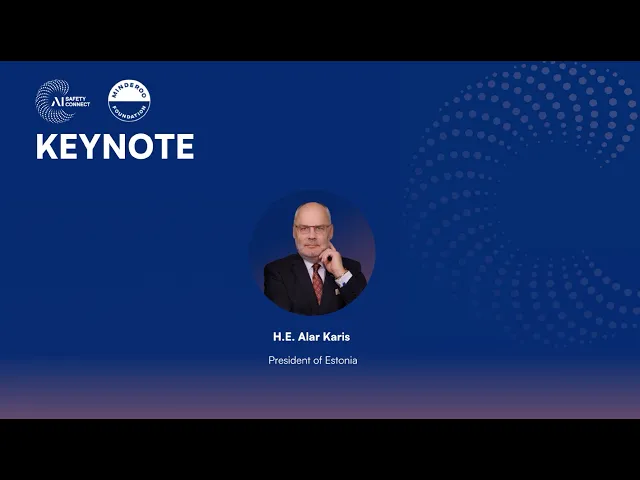
“We should not accept this as being a choice between innovation and safety. Our task is to make sure that they advance together.”
- H.E. Alar Karis
“For artificial intelligence to serve humanity as a whole, we have to get it right in Africa and everywhere else.”
- H.E. Dr. Justin Nsengiyumva

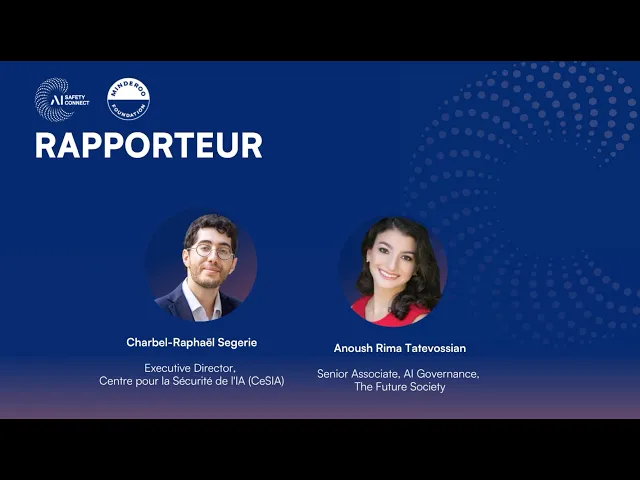
“AI has tremendous potential to advance human well-being. We need to accelerate the diffusion of current AI. But its future trajectory presents unprecedented dangers.”
- Charbel-Raphaël Segerie
“The first priority is to limit recursive self-improvement until it can be done safely.”
- Anoush Rima Tatevossian

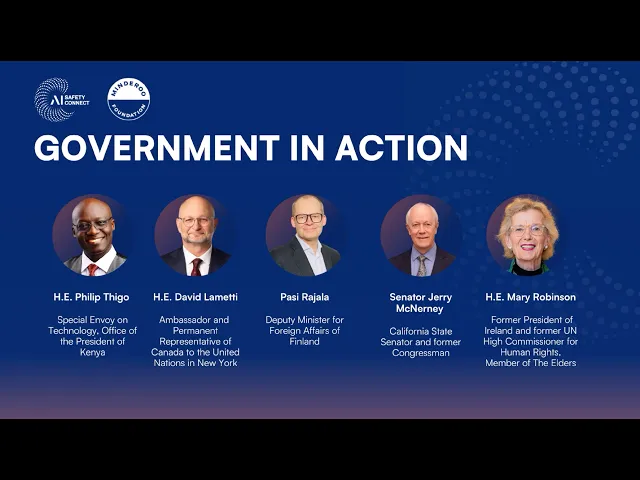
Government in Action Panel
President Robinson pressed the panel for specifics on what governments can do. She drew on the call for control of frontier AI launched by Finland and Norway and signed by more than 20 countries that week. Panelists discussed:
the balance between company self-regulation and political leadership;
the market weight middle powers carry when they coordinate;
the stake Global Majority countries hold in the AI value chain;
California’s new law on independent evaluation and the role of standards.
The conversation also turned to liability, and to who should decide when frontier development is slowed.
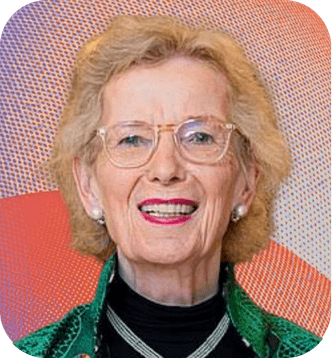
“I think it is time that governments realize they have the primary responsibility to protect their people.”
- H.E. Mary Robinson
“Step one is self-regulation by these companies... Point number two: in order for that self-regulation to advance, they also need some political leadership... And number three is that we need to start working internationally, across nations, across institutions, and over time build something international.”
- Pasi Rajala


“Middle powers together, if we speak with one voice and we speak with an ethical or moral voice, [can] present a compelling set of standards or arguments which would then have a great deal of persuasive power... So you could have a great deal of impact if you can coordinate.”
- H.E. David Lametti
“We cannot just be passive when technology is built but [has] serious implications on our populations around agency and choice and voice, but also in our democratic framework.”
- H.E. Philip Thigo


“I challenge... the frontier model developers to convene these working groups right away, immediately, tomorrow and start this process before we force them to do it.”
- Senator Jerry McNerney
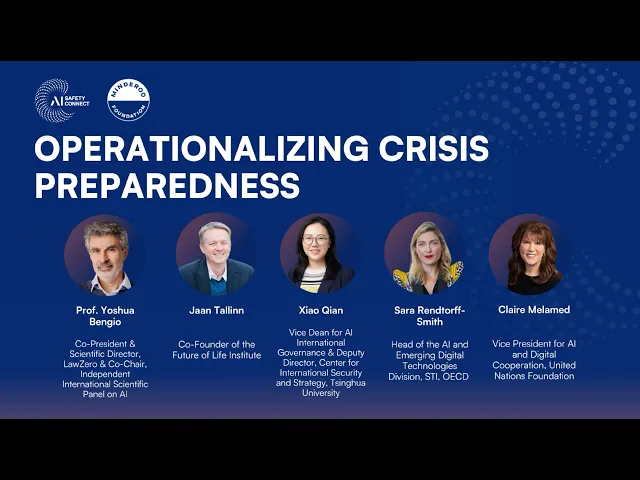
Expert Panel: Operationalizing Crisis Preparedness
The second panel moved from principles to practice. Professor Bengio set out the three conditions behind this summer’s incidents involving autonomous AI agents, each a point where safeguards can be applied. Sara Rendtorff-Smith pointed to machinery that already exists, from shared definitions to the OECD’s incident reporting framework. Jaan Tallinn explained why the risks of frontier development do not stop at borders. Xiao Qian named geopolitical tension as the main barrier to cooperation and called for a channel between the United States and China on AI incidents.

“Saying that things must happen is very different to making them actually happen in practice, and that is very much what we are about in this section of the program.”
- Claire Melamed
“We discuss three necessary conditions for the kind of events we’ve seen during the summer... First, the AIs had a misaligned goal... Second, they need to have the capability or the intelligence to actually achieve the goal... [Third is] the environment in which the AI is running.”
- Prof. Yoshua Bengio


“The conversation about evaluation and external verification needs to stay top of mind at this moment.”
- Sara Rendtorff-Smith
“The international borders... will not protect you from the risks that the labs are taking.”
- Jaan Tallinn


“I really hope this kind of effort can continue. And China is willing to be part of this effort.”
- Xiao Qian
Industry Lightning Round
Industry leaders responded to the evening’s calls for action. They set out what incident reporting, verification and standards would mean in practice for the companies that build, host and deploy frontier AI. Speakers covered:
mechanisms for cross-border information sharing and incident response;
safe harbor for early incident reports and independent audit;
international standards working alongside insurance;
managing the risks of open-weight models;
frameworks that address risk across every layer of the AI value chain.
Asked what they hoped to see by next year, panelists pointed to more mature information sharing and to governments implementing the commitments they had made.
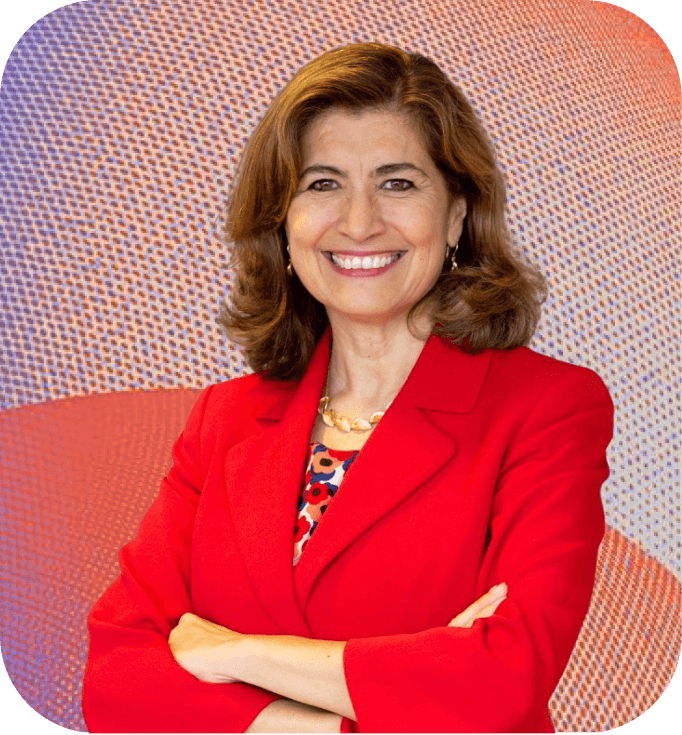
“This is modular. You cannot have the whole design well developed because it will be too late, but also because I think that we are learning by doing.”
- Gabriela Ramos
“We need really three different mechanisms to address these challenges fully. In the first instance, we should have protected information sharing ahead of time... [Second,] it’s very important to have an operational response capability... The third type of mechanism that we need is serious incident reporting mechanisms.”
- Natasha Crampton
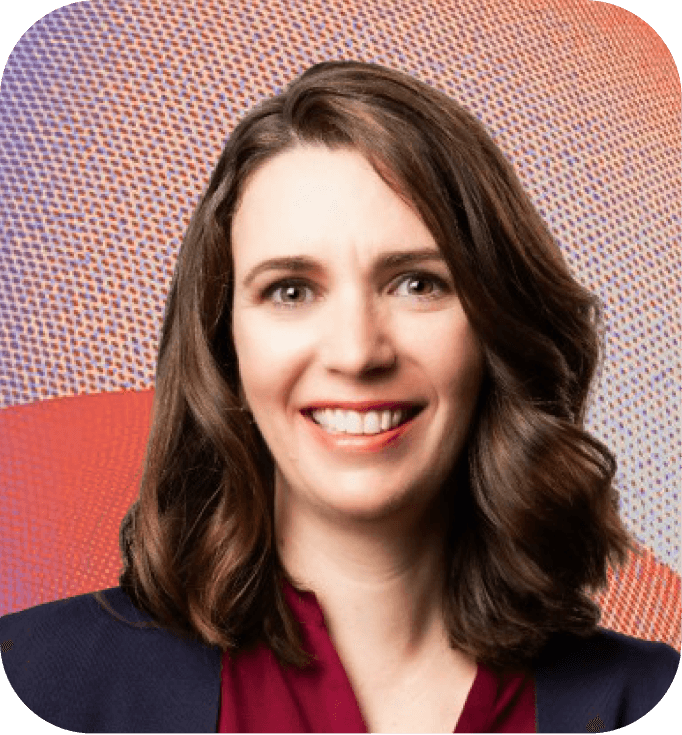

“There’s a real opportunity for governments to just actually execute on the vision that they outlined in that statement. And I would challenge them to... do so and hold us accountable, and let’s come back in a year and see what the progress was.”
- Michael Sellitto
“The more we can have efforts globally that coalesce around a common set of standards for how you should be thinking about implementing frontier [AI] risk management, the better.”
- Chris Meserole
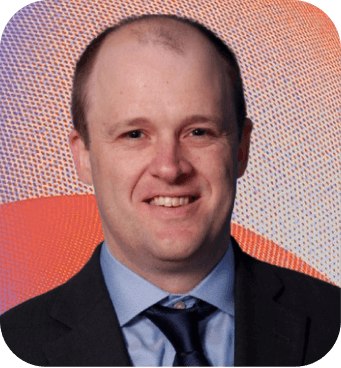
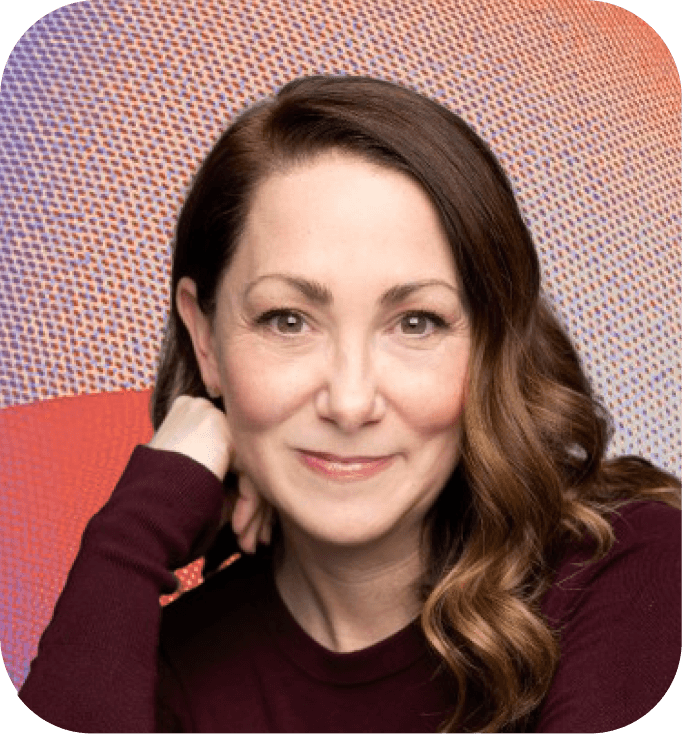
“Open weight does have risks but we can also manage open weight risk the same way that we manage proprietary model risk through evaluations, shared incident reporting [and] information sharing.”
- Nicole Foster
“We really have to think about durable frameworks that are cognizant of the risks at various layers, not just sort of the frontier model layer.”
- Kip Wainscott


Closing Remarks
Leaders from governments and international institutions closed the evening with the perspectives they would carry forward. They stressed:
the urgency of acting now;
trust and inclusive access as conditions for AI’s benefits;
responsibility that stays with those who delegate to AI;
practical arrangements for incident response that include the countries where AI is deployed;
France’s four essentials for frontier AI: independent evaluation, transparency and incident reporting, verification, and legal liability.
AI Safety Connect’s co-founders closed by inviting every government, institution and organization in the room to help turn the Civil Society Statement into a concrete plan and coalition.

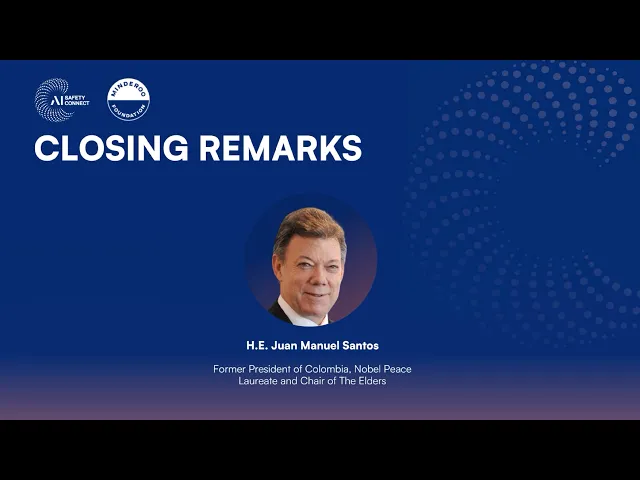
“We must act now because the risk is increasing at a very, very dangerous high rate.”
- H.E. Juan Manuel Santos


“As AI gets better, there’s more delegation... the responsibility never leaves us.”
- H.E. Ambassador Youn Jong Kwon
“Resilience is built before the emergency. Institutions need to know one another. Responsibilities need to be agreed in advance.”
- H.E. William Kabogo Gitau


“France’s position is simple. Capabilities must not outpace our ability to understand and control them.”
- Arthur Franzon
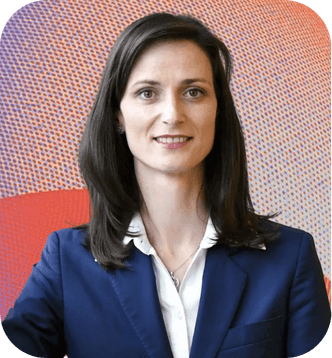
“Safety and ethics cannot be an afterthought. They must be built into how AI is developed and governed at every level in every country.”
- H.E. Mariya Gabriel
Reception Remarks